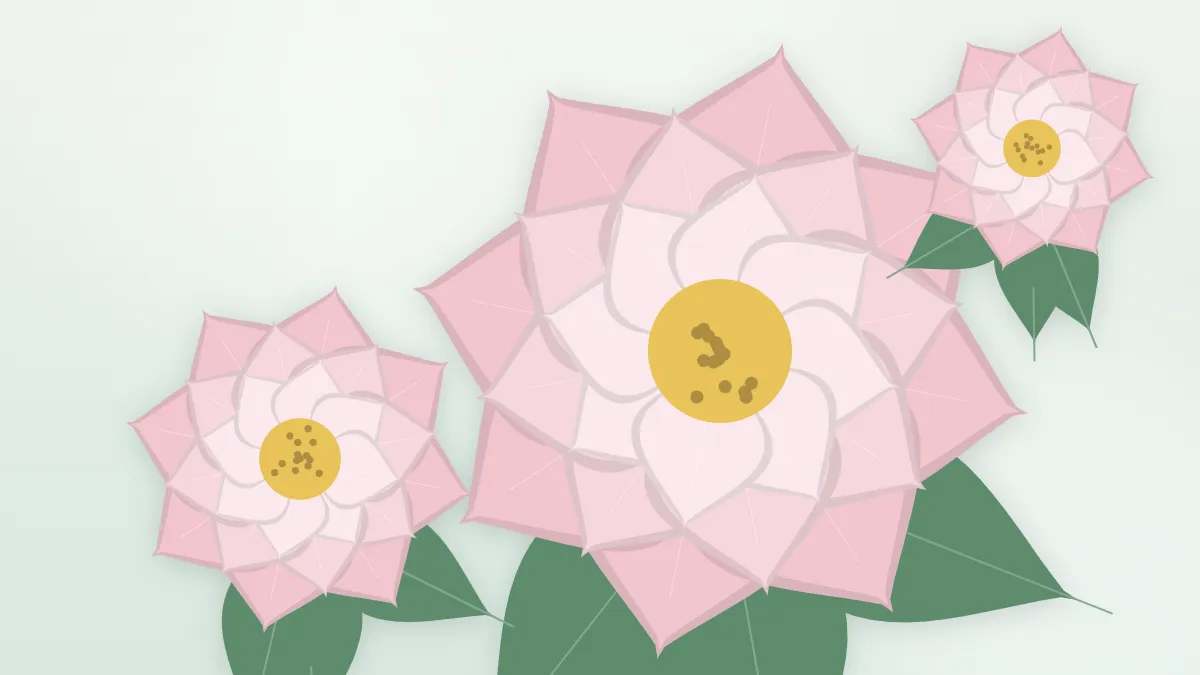
Few flowers carry as much meaning as the lotus. It appears in Buddhist and Hindu art, in temple architecture, in poetry and, today, in jewelry and tattoos. Most of its symbolism grows from one striking habit: the plant roots in mud at the bottom of ponds and lifts a clean, unblemished flower above the water.
Quick Meaning
The lotus is most often associated with purity, spiritual awakening and rebirth — the idea of rising clean and whole from difficult conditions. In Buddhism it is closely tied to enlightenment; in Hinduism, to divinity, beauty and prosperity.
Interpretations vary by tradition, region and color, and many color meanings are modern.
What the Lotus Symbolizes
Across the traditions that hold it sacred, the lotus tends to gather a cluster of related ideas rather than a single meaning. The common thread is transformation: something beautiful and clean emerging from murky water.
Meaning at a Glance
- PurityClean blooms rising from muddy water
- RebirthThe plant’s return and renewal each season
- Spiritual growthLinked with enlightenment in Buddhism
- PeaceCalm, detachment and composure
Many of these associations are explored further in our guide to flowers that represent rebirth, where the lotus sits alongside spring bulbs and other symbols of renewal.
Cultural Context
Flower meanings can differ between countries, religions and historical periods. A meaning described here as common in one tradition should not be read as universal.
Botanical Profile
The flower most people mean by “lotus” is the sacred lotus. Knowing the plant helps separate it from the water lilies that share its name in some traditions.
Sacred Lotus
Sources listed below- Common names
- Sacred lotus, Indian lotus
- Scientific name
- Nelumbo nucifera
- Family
- Nelumbonaceae
- Plant type
- Aquatic perennial growing from rhizomes
- Native range
- Ukraine to northern Iran, the Russian Far East to tropical Asia, and northern and northeastern Australia [1]
- Bloom season
- Summer; individual flowers last about a week [2]
A related species, the American lotus (Nelumbo lutea), has pale yellow flowers and is native to North America.
Lotus Meaning by Color
Color meanings for the lotus are widely repeated in modern guides, but they are largely modern interpretations. Buddhist art does use different colors of lotus, yet the neat one-color-one-meaning lists seen online are not found in a single traditional source.
| Color | Common modern association | Note |
|---|---|---|
| White | Purity, mental clarity | The most consistently cited meaning |
| Pink | Devotion; sometimes linked with the Buddha | Varies between sources |
| Red | Love and compassion | Modern interpretation |
| Blue | Wisdom and knowledge | “Blue lotus” usually refers to a water lily, not Nelumbo |
| Purple | Mysticism, spiritual practice | Modern interpretation |
| Yellow | No strongly fixed meaning | American lotus is pale yellow |
The Lotus in Buddhism
In Buddhism the lotus is one of the most important symbols. Its growth from mud to flower is used as an image of the mind rising from attachment and suffering toward awakening. Buddhas and bodhisattvas are frequently shown seated or standing on lotus thrones, and one of the best-known Mahayana scriptures is called the Lotus Sutra.
For a fuller treatment, read our guide to the lotus in Buddhism and our article on the Japanese lotus (hasu).
The lotus in Japanese Buddhism
In Japan the lotus, or hasu, is closely associated with Buddhist imagery of paradise, which is one reason it appears in temple gardens and memorial contexts.
The Lotus in Hinduism
The lotus is also sacred in Hinduism, where it is associated with several deities. Lakshmi, goddess of wealth and good fortune, is commonly depicted seated on or holding a lotus, and in creation imagery Brahma is shown emerging from a lotus. The lotus is the national flower of India.
Lotus vs Water Lily
The two are often confused, and symbolism written about one is frequently applied to the other. The “lotus” of ancient Egyptian art, for example, is a water lily.
| Feature | Sacred lotus | Water lily |
|---|---|---|
| Genus | Nelumbo | Nymphaea |
| Family | Nelumbonaceae | Nymphaeaceae |
| Leaves | Large and round; often raised on stalks well above the water | Usually floating, typically with a notch |
| Flowers | Usually held high above the water | Usually at or just above the surface |
| Seed head | Distinctive flat-topped pod | No comparable pod |
Gifting and Tattoos
As a gift, the lotus suits new beginnings, recovery or a spiritual milestone. Because it is a religious symbol for many people, it is worth thinking about the recipient’s background. As a tattoo, it is a common choice for designs about resilience — see our guide to lotus tattoos and strength.
Florist Note
Fresh lotus stems can be hard to find at many US florists. Dried lotus seed pods are a more common way to include the plant in arrangements.
Plant Safety
Safety at a Glance
Safety status is shown only when confirmed by veterinary or poison-control sources. For suspected poisoning, contact a medical, poison-control or veterinary professional.
Frequently Asked Questions
What does a lotus flower symbolize?
The lotus is most often associated with purity, spiritual awakening and rebirth. These meanings come mainly from Buddhist and Hindu traditions, where the flower’s growth from muddy water into a clean bloom became an image of rising above difficulty. Specific meanings vary by tradition and by color.
Is a lotus the same as a water lily?
No. The sacred lotus (Nelumbo nucifera) belongs to the family Nelumbonaceae, while water lilies (Nymphaea) belong to Nymphaeaceae. Lotus leaves and flowers are often raised well above the water, and the plant forms a distinctive flat-topped seed pod. The “Egyptian lotus” of ancient art is a water lily.
What does a pink lotus mean?
In modern guides, the pink lotus is commonly linked with devotion, and some describe it as the lotus most associated with the Buddha. These color meanings are largely modern interpretations rather than fixed doctrine, so they differ between sources.
Why is the lotus linked with rebirth?
The lotus emerges from mud and still water to flower each summer, which made it a natural image of renewal in several traditions. In Buddhist and Hindu contexts this connects to wider ideas about spiritual rebirth and awakening.
Is a lotus a good gift?
It can be, particularly for new beginnings, recovery or a spiritual milestone. Because the lotus has religious significance for many people, it is worth considering the recipient’s background. Fresh lotus stems can be hard to find at florists; dried seed pods and lotus motifs are common alternatives.
Sources & Further Reading
- Royal Botanic Gardens, Kew — Plants of the World OnlineNelumbo nucifera Gaertn. (opens in a new tab)
- Missouri Botanical GardenSacred Lotus (opens in a new tab)
- ASPCA Animal Poison Control (further reading)Toxic and Non-Toxic Plant List (opens in a new tab)